


Los Cabos has evolved into one of the most important golf destinations in North America.
The reason is not simply the number of courses. It is the extraordinary concentration of world-class golf architecture, dramatic terrain and distinctly different playing experiences found within a relatively compact destination.
Jack Nicklaus, Tom Fazio, Tiger Woods, Davis Love III, Greg Norman, Fred Couples, Robert Trent Jones II and now Ernie Els have all designed courses here. Some run along the Sea of Cortez. Others climb through desert foothills or weave between enormous Pacific dunes. Some are intensely private, while others can be played by visitors staying in Los Cabos.
For golfers, that creates an interesting problem.
There are enough exceptional courses that asking “What is the best golf course in Los Cabos?” doesn’t produce a simple answer.
Quivira may deliver the greatest visual drama. Diamante offers perhaps the deepest concentration of serious golf. Querencia has built its reputation around a private Tom Fazio experience and is now adding a second course. Twin Dolphin takes a more naturalistic approach. Palmilla remains one of the destination’s foundational Nicklaus designs. And Oleada Golf Links, the newest name in the conversation, introduces an entirely different interpretation of Pacific golf through Ernie Els.
The better question, therefore, is:
What kind of golf experience are you looking for in Los Cabos?
Because these courses are anything but interchangeable.
Before comparing individual courses, it helps to understand the geography.
The difference is more than visual.
Wind, elevation, terrain, routing and even the atmosphere surrounding a round can change substantially depending on which side of Los Cabos you play.
That diversity is one of the destination’s greatest strengths.
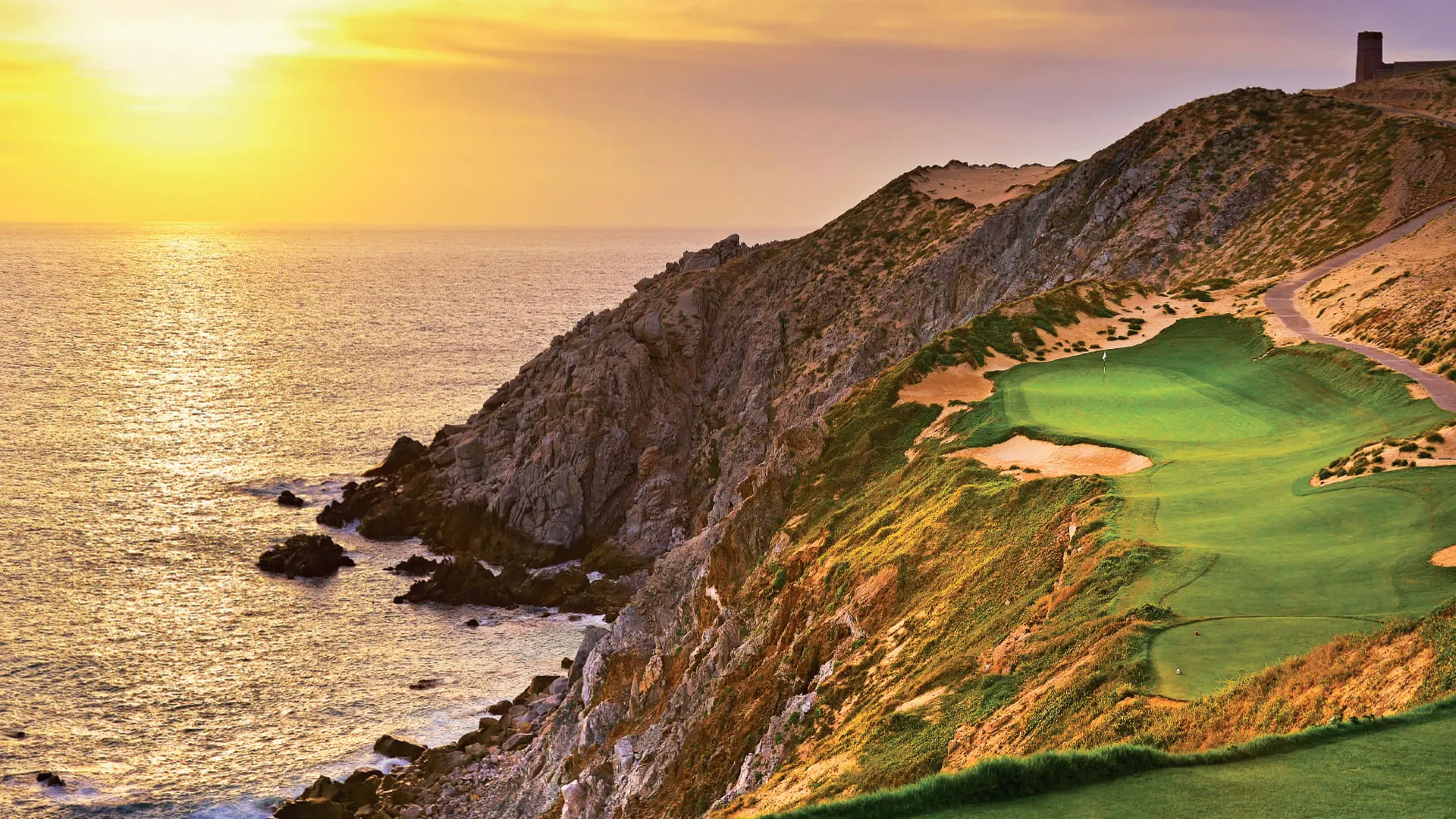
Dramatic, elevated, adventurous.
If someone asked me which Los Cabos course produces the greatest sense of spectacle, Quivira Golf Club would be one of my first answers.
Jack Nicklaus was given an extraordinary piece of Pacific terrain and created a course that moves from beach level into desert, dunes and dramatic cliffs high above the ocean.
The 18-hole, par-72 layout stretches to 7,085 yards from the championship tees. More importantly, the routing constantly changes character. One moment you are surrounded by cactus and desert terrain; later you are standing hundreds of feet above the Pacific trying to focus on a golf shot while the ocean dominates the horizon.
That visual drama is Quivira’s signature.
It is also what makes the course polarizing for some serious golfers.
Quivira is not a quiet, understated walk through predictable terrain. There are major elevation changes, transitions and holes that ask the golfer to embrace the landscape rather than simply play through it.
For a first-time visitor looking for a round that will be remembered years later, that is precisely the attraction.
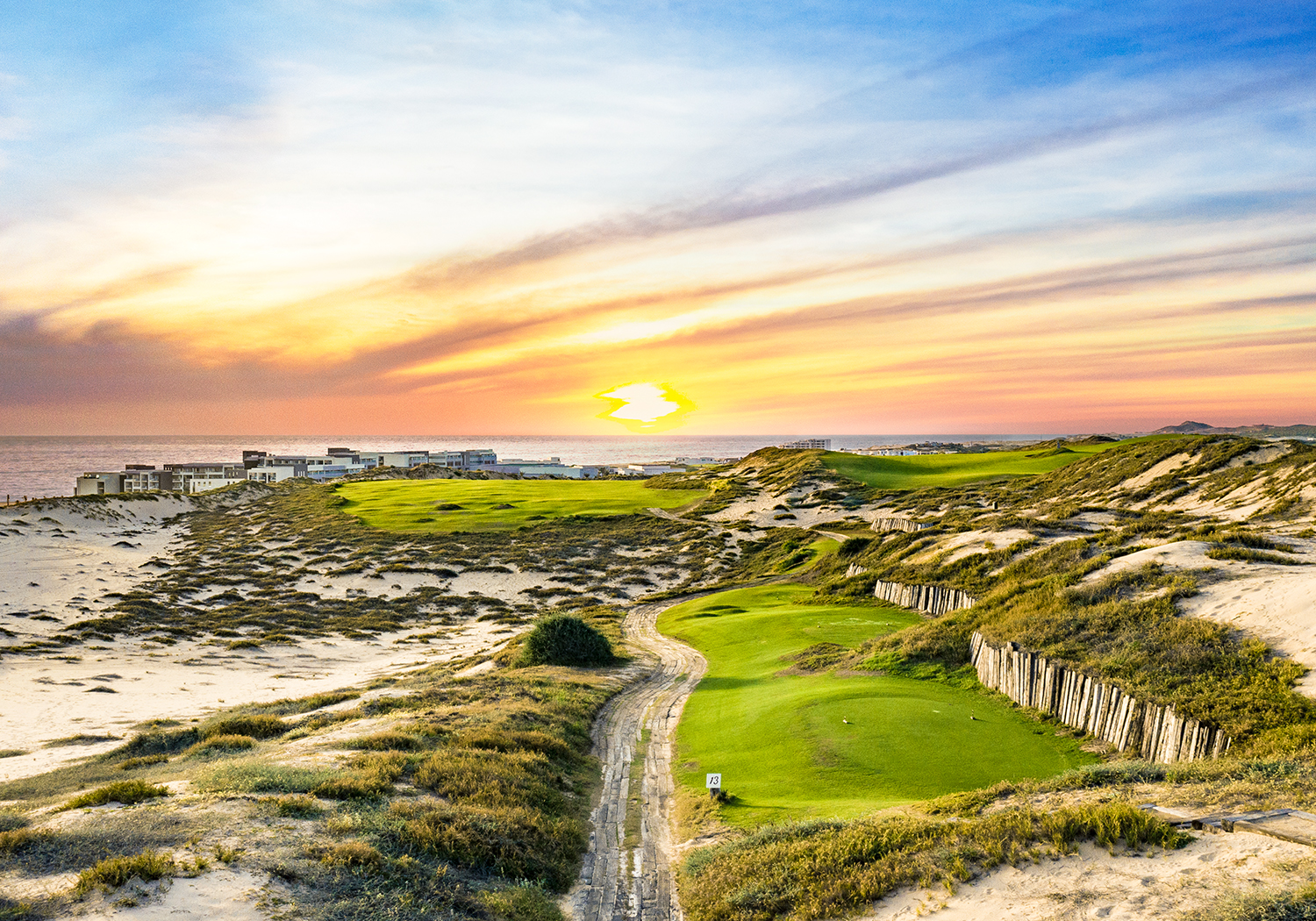
Natural, strategic, windswept.
Drive farther along the Pacific and the golf philosophy changes considerably at Diamante‘s Dunes Course.
Designed by Davis Love III, the Dunes occupies enormous natural sand formations along the Pacific. The course opened in 2009 and has subsequently appeared in major international golf rankings.
What makes it particularly interesting is how naturally the holes appear to sit in the landscape.
Rather than relying primarily on dramatic elevation to create excitement, the Dunes uses movement through the land itself. At times the golfer disappears between the dunes before suddenly emerging to another expansive Pacific view.
There is a links influence here, although this is unmistakably Baja rather than Scotland.
The ground, wind and angles become part of the strategy.
And unlike a course whose primary appeal might be a handful of signature holes, the Dunes is better understood as a complete golf experience.
For serious golfers, that distinction matters.
A spectacular photograph can make one hole famous.
A great routing makes you want to play all 18 again.
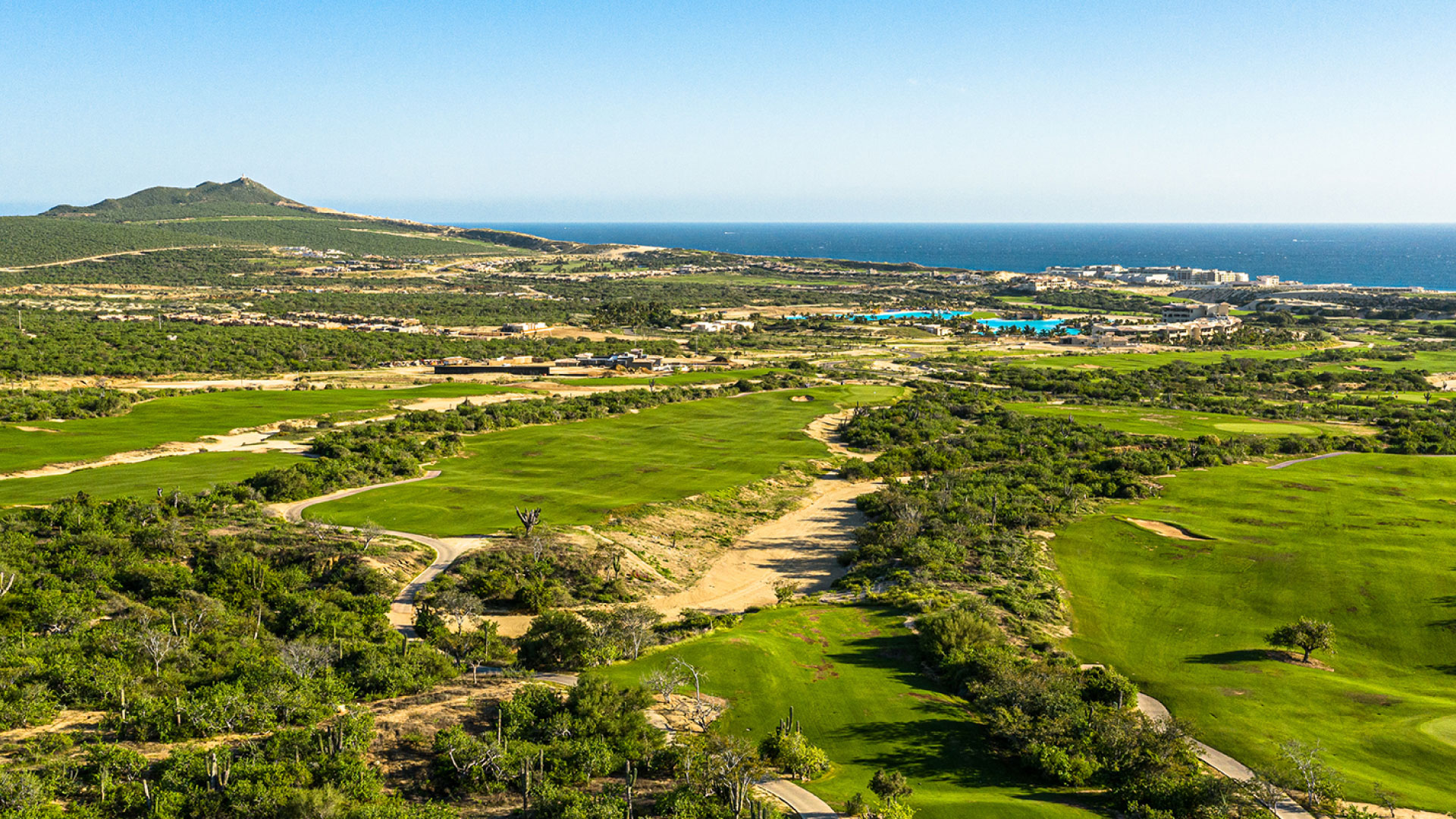
Wide, strategic, playable.
Diamante becomes even more unusual because the Dunes is not its only championship course.
El Cardonal, opened in 2014, was Tiger Woods’ first completed golf course design.
And it plays very differently.
Woods has explained that his strategy was influenced by the Southern California courses he grew up playing. The fairways provide width and options, but the angle chosen from the tee affects the approach into the green.
That makes El Cardonal particularly interesting for golfers of different abilities.
A lower-handicap player can challenge aggressive lines to create better approach angles.
A higher-handicap player can often choose more conservative routes and keep the ball in play.
The result is a course that can be demanding without requiring every golfer to play the same game.
For homeowners and frequent Cabo golfers, that repeatability is important. A course becomes more interesting over time when changing tee positions, wind and strategy can alter how a hole should be played.
Diamante also offers the Tiger Woods-designed Oasis Short Course, giving the community a depth of golf that is difficult to match elsewhere in Los Cabos.
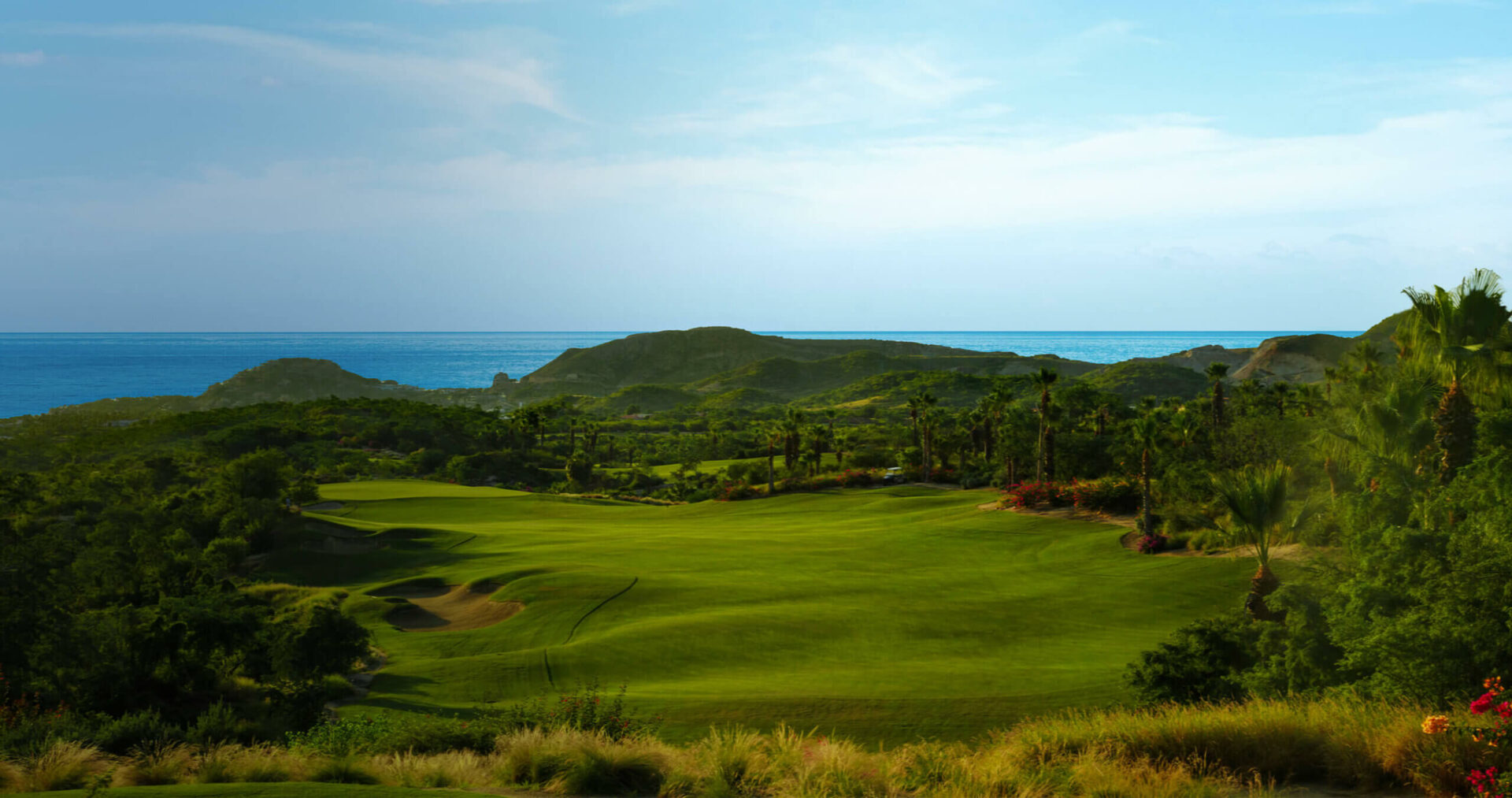
Refined, strategic, private.
Querencia deserves a different kind of discussion because its golf experience is fundamentally private.
Its original Tom Fazio course—now known as Campo Bajo—was Fazio’s first design outside the United States. Querencia currently describes the 18-hole, par-72 course as spanning more than 300 acres, with 12-minute tee intervals and three comfort stations integrated into the golf experience.
The course has developed an international reputation, but rankings tell only part of the story.
What separates a serious private golf club from a destination course is repeatability.
A visitor may judge a course based on one spectacular round.
A member may play it dozens of times per year.
That means the course must remain interesting after the novelty disappears.
Angles, green complexes, shot selection, conditioning, practice facilities and pace of play become more important than whether one particular hole produces the perfect Instagram photograph.
That is where Querencia’s golf proposition becomes particularly strong.
It feels like a home course rather than a tourist attraction.
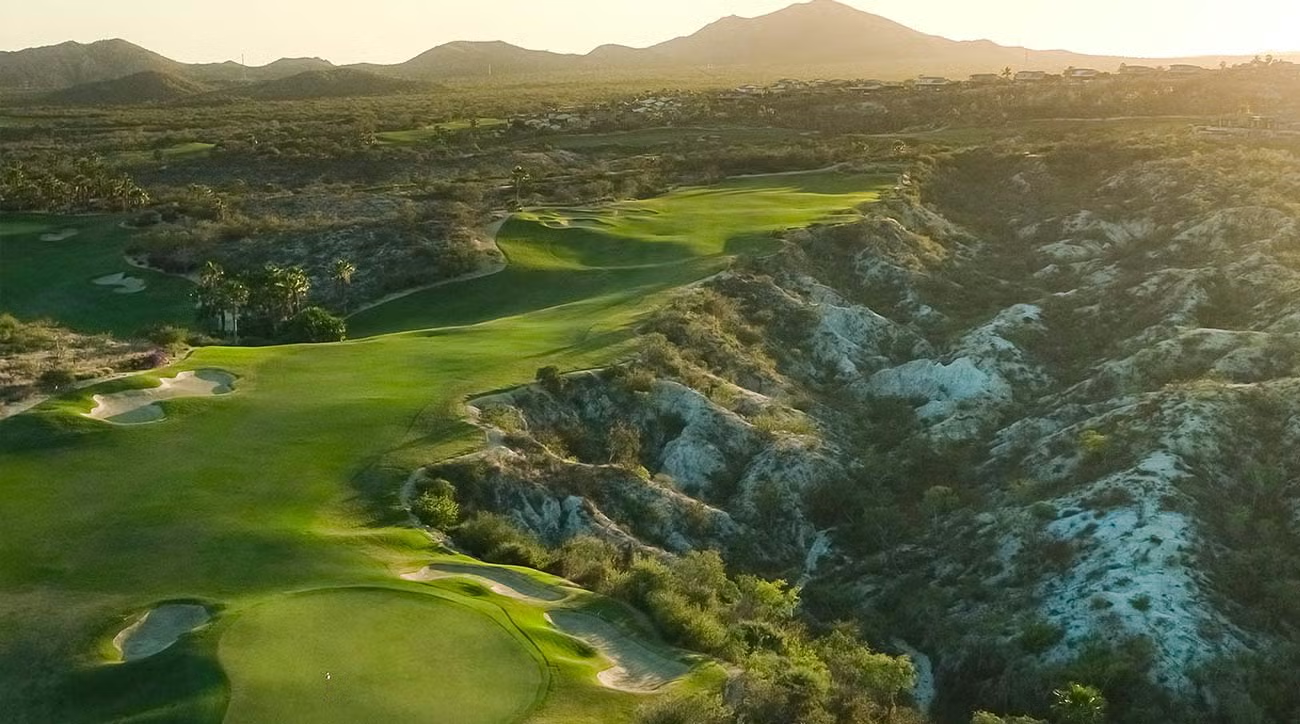
New-generation Fazio design emphasizing playability and approach strategy.
Querencia is also responsible for one of the most important current developments in Los Cabos golf.
Campo Alto, another Tom Fazio design, is being developed as a second 18-hole course.
Rather than simply duplicating Campo Bajo, the new par-72 course is intended to create a distinctly different playing experience. Querencia describes a non-returning routing moving across approximately 400 acres of ridges and canyons, with particular emphasis on second-shot strategy.
The significance goes beyond adding another 18 holes.
Two genuinely different full-length courses fundamentally change the proposition of a private golf community.
A member who plays frequently gains variety without leaving the club.
That puts Querencia into a much smaller category of Los Cabos communities capable of offering substantial golf depth within a private membership environment.
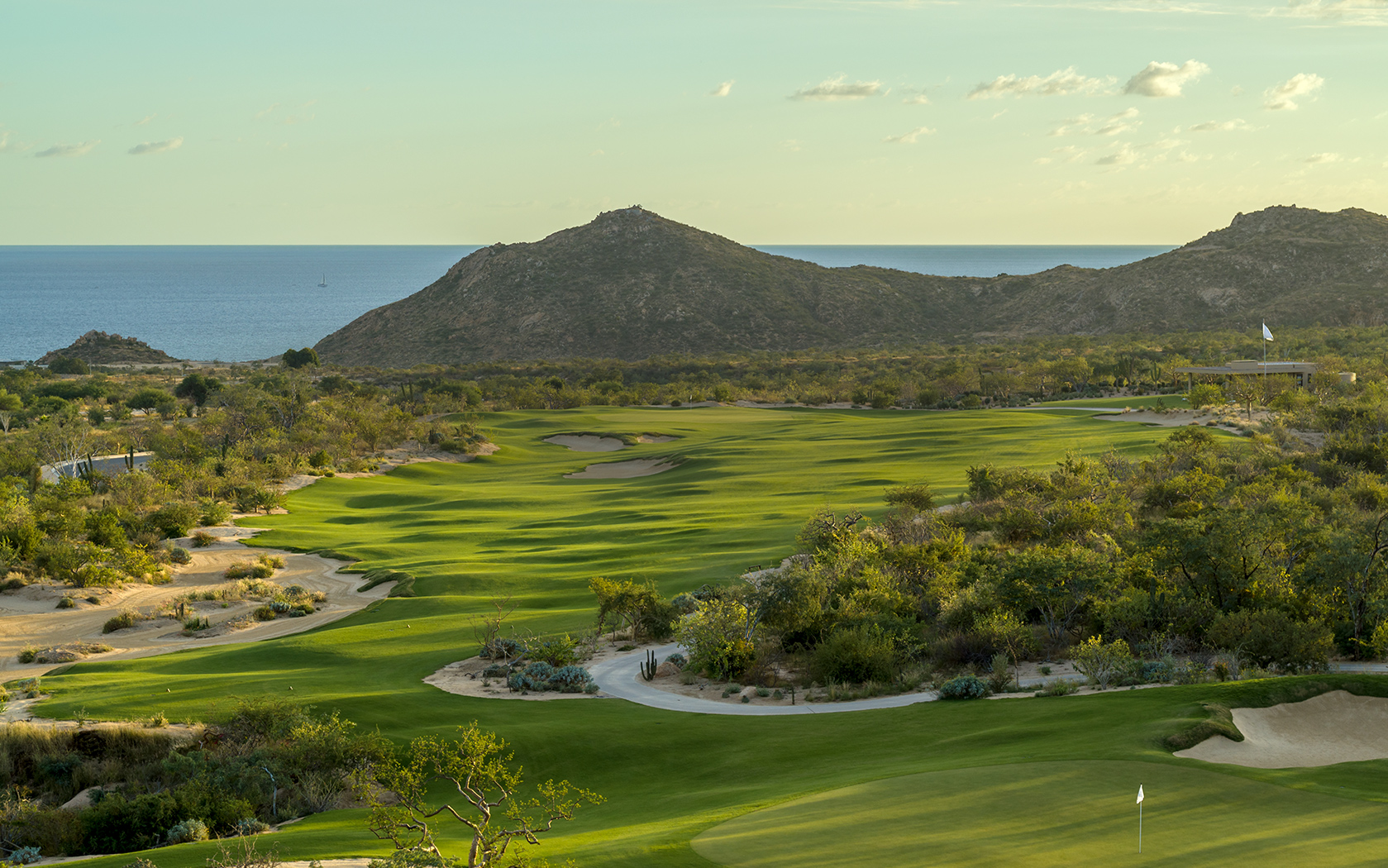
Flowing, natural, relaxed.
Twin Dolphin Golf Club provides one of the most naturalistic experiences along the Tourist Corridor.
The 18-hole, par-72 course was created by Fred Couples with Todd Eckenrode of Origins Golf Design and opened in 2018.
Rather than forcing golf onto the Baja landscape, the routing works around arroyos, natural contours, rock formations and elevation changes. Broad rolling fairways and open-entry greens make the course visually inviting, while the terrain provides the strategic interest.
There is also a remarkable consistency to the setting: views of the Sea of Cortez are present throughout the course.
Twin Dolphin is private, with tee times tied primarily to its membership and associated residential/resort access.
That exclusivity changes the experience. The course is not trying to process large volumes of daily-fee golfers. It is part of a larger private-club lifestyle.
For golfers who appreciate naturalistic architecture and a relaxed private atmosphere, Twin Dolphin is one of Cabo’s most compelling options.
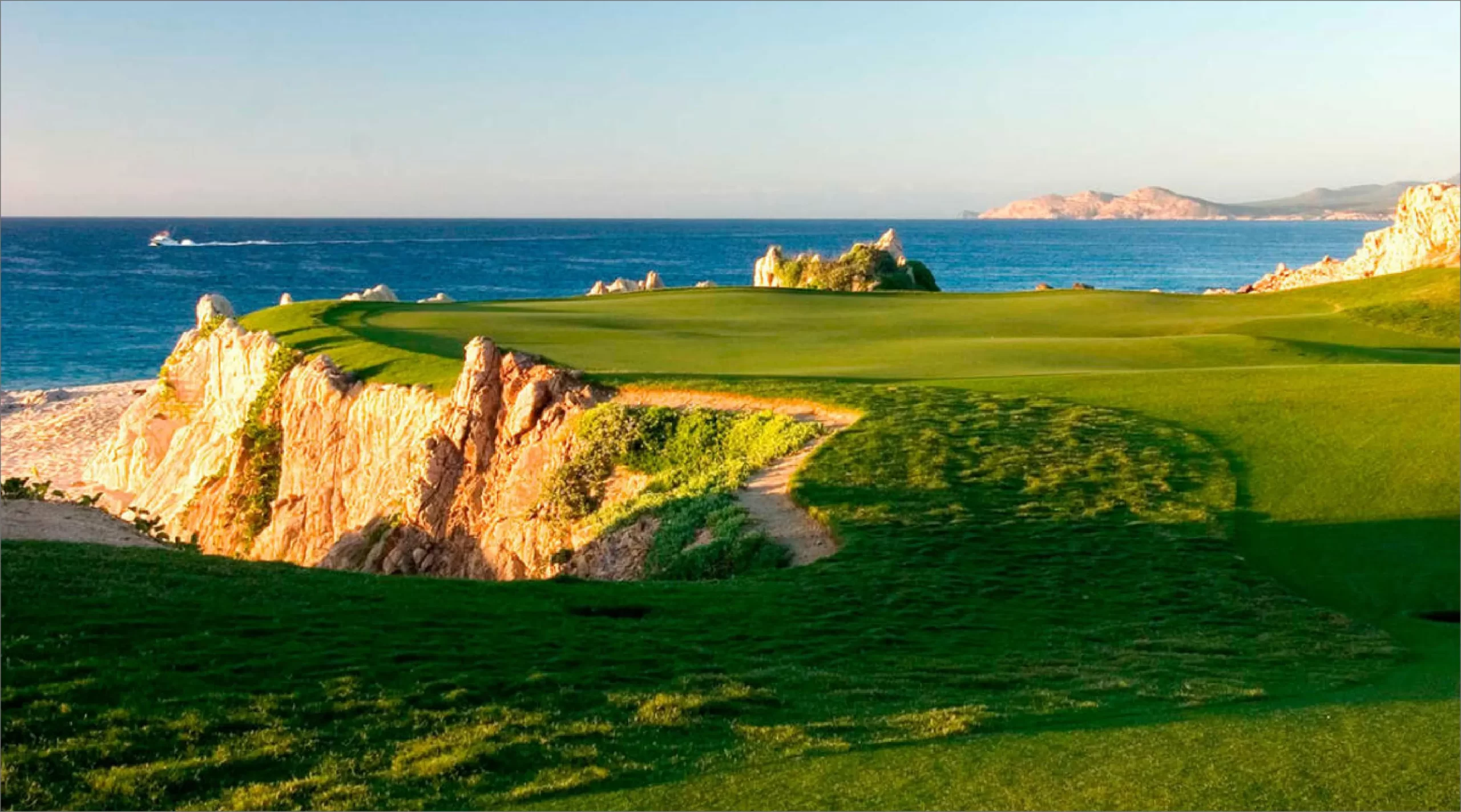
Exclusive, polished, member-focused.
Few courses illustrate the relationship between golf and private residential life in Cabo better than El Dorado Golf & Beach Club.
Its Jack Nicklaus-designed course sits within a members-only community along the Tourist Corridor.
That context matters.
The golf experience at El Dorado is not intended primarily as a bucket-list vacation round. It is part of the daily rhythm of the club.
Members play golf, use the beach and wellness facilities, dine together and return to their residences—all within the same private ecosystem.
From a pure golf standpoint, Nicklaus had access to an exceptional piece of coastal Baja terrain. But the defining characteristic of El Dorado is arguably the combination of the course and the membership culture surrounding it.
For someone considering Los Cabos not merely as a golf destination but as a place to own a second or third home, that difference becomes important.
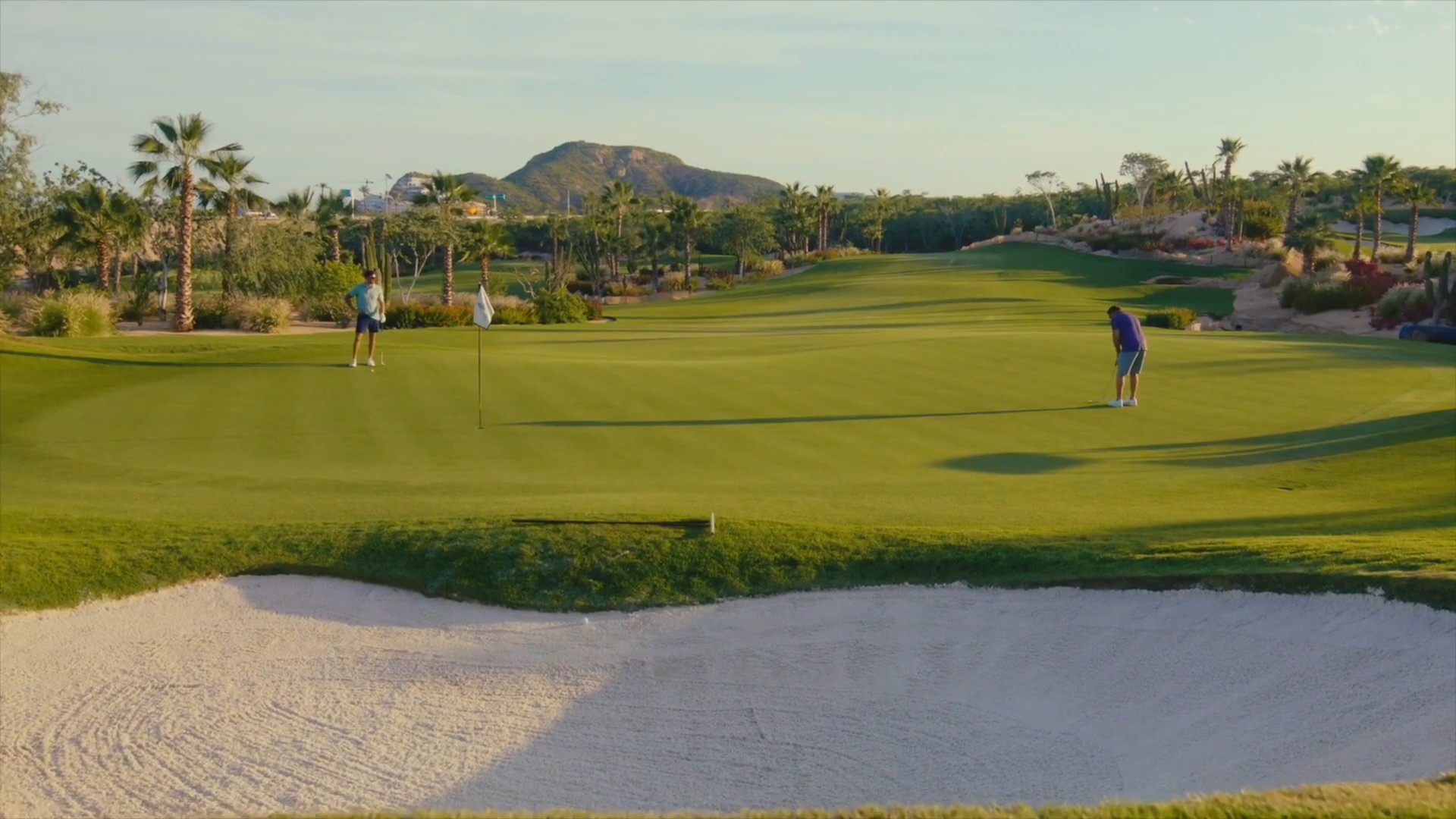
Private, polished, family-oriented.
Chileno Bay Golf & Beach Club offers another Tom Fazio design, but the environment surrounding it feels quite different from Querencia.
The private 18-hole course sits within approximately 1,200 acres of natural desert terrain. The community combines golf with one of the destination’s strongest beach-oriented lifestyles, including its Beach Club and access to the celebrated Chileno Bay coastline.
The golf itself is therefore only one part of the attraction.
For a household where one person wants exceptional golf but the rest of the family prioritizes swimming, beach, wellness and other activities, Chileno Bay creates an unusually balanced proposition.
That does not diminish the course.
It simply changes the reason someone might choose it.
Golf can be world-class without requiring the entire family’s life to revolve around golf.
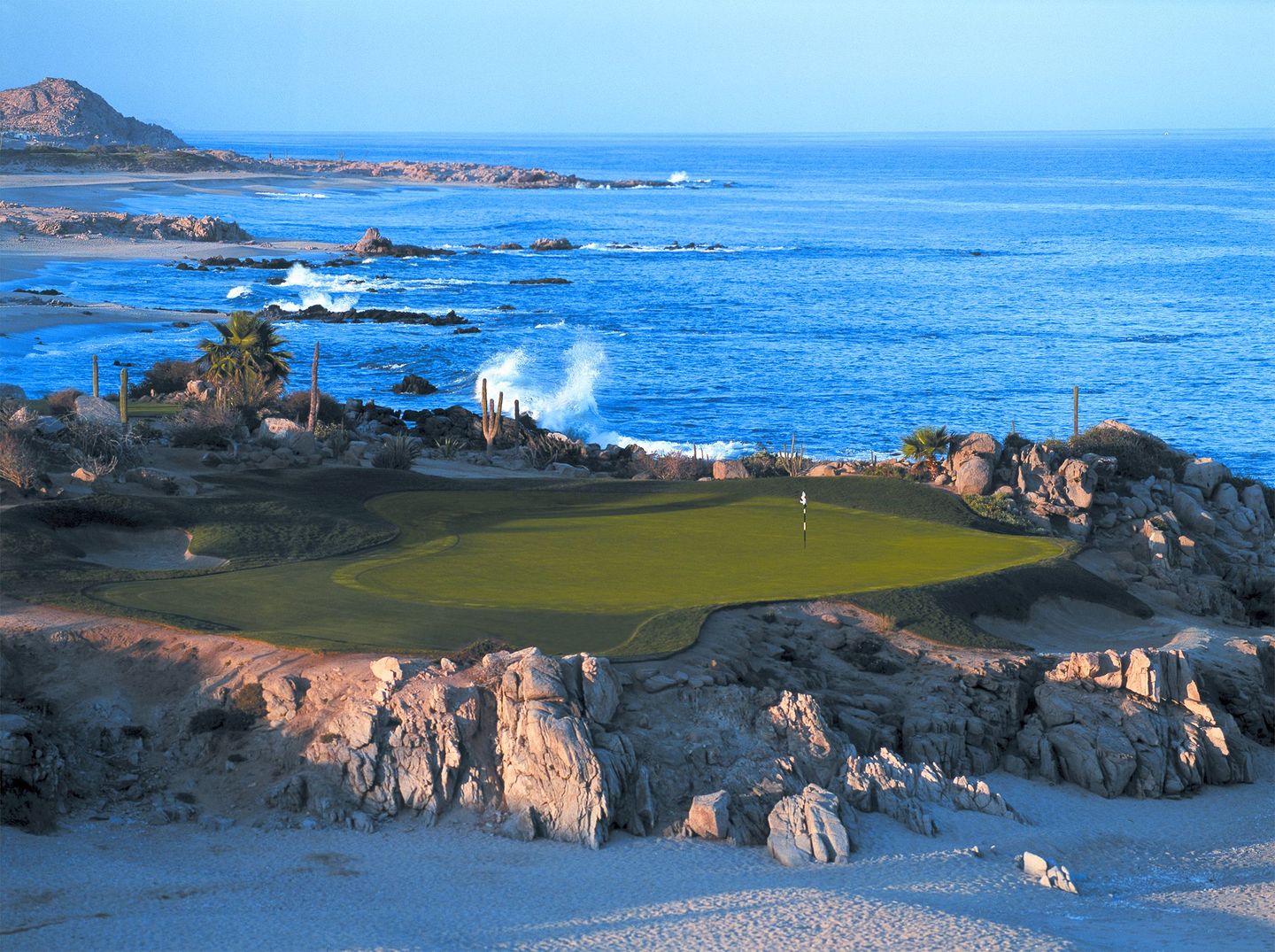
Coastal, established, prestigious.
The golf history of Los Cabos cannot be discussed without Cabo del Sol.
Jack Nicklaus’ original Ocean Course was instrumental in establishing the destination’s international golf reputation. Today, that heritage continues within the private Cove Club at Cabo del Sol environment.
The attraction is easy to understand.
Desert golf and oceanfront golf come together in a location directly along the Tourist Corridor, and the surrounding community has evolved into a sophisticated private residential and hospitality destination.
For many golfers, Cabo del Sol represents the classic image of Los Cabos golf: desert terrain suddenly meeting the blue water of the Sea of Cortez.
Its importance is therefore both historical and contemporary.
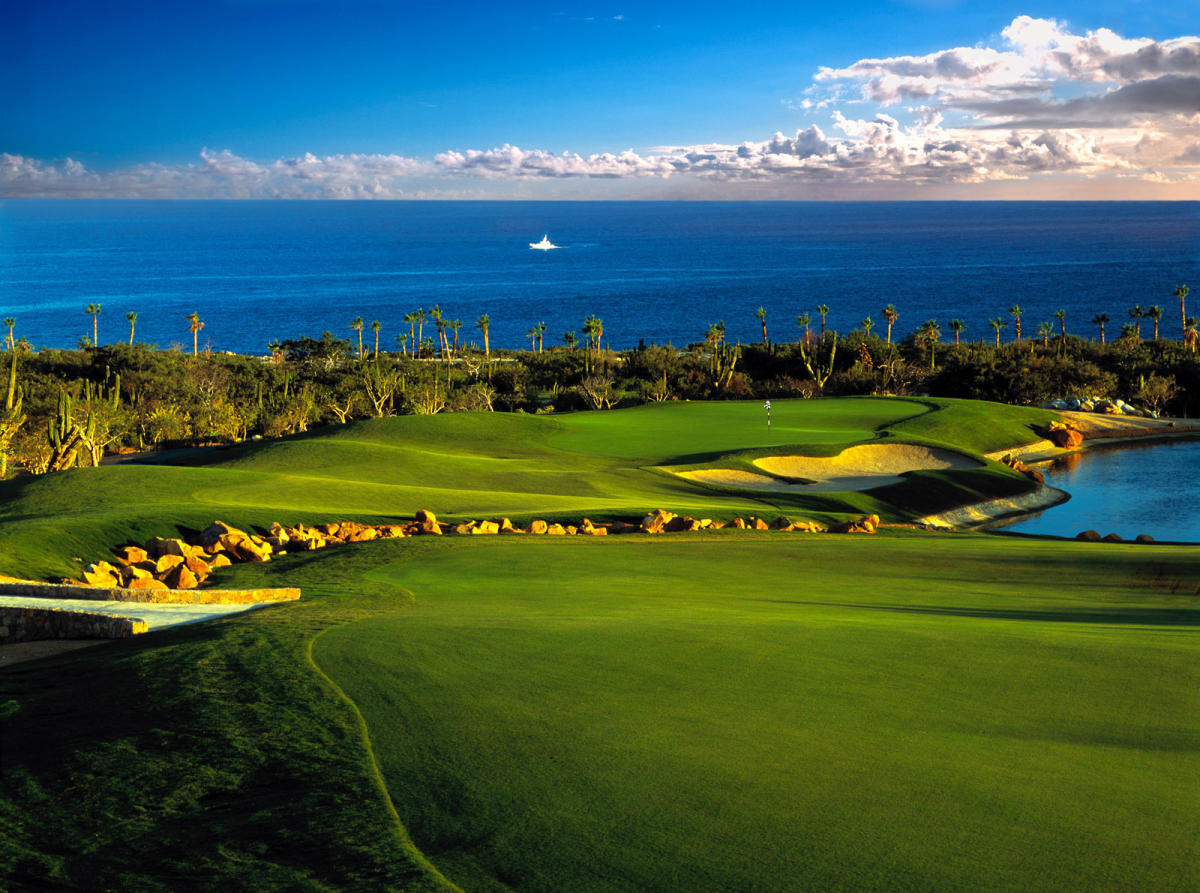
Established, scenic, versatile.
Before Los Cabos became crowded with internationally recognized golf architects, there was Palmilla.
Jack Nicklaus’ original Mountain and Arroyo nines opened in 1992, establishing the first Nicklaus Signature design in Latin America. The later Ocean nine expanded Palmilla to 27 holes.
That history still matters.
Palmilla helped prove that the Baja desert could support a completely new style of destination golf—one where arroyos, cactus, mountains and the Sea of Cortez became part of the same visual composition.
The 27-hole format also creates something valuable: variety.
Golfers can play different combinations rather than repeating the same 18 every round.
Palmilla may no longer be the newest course in Cabo, but it remains one of the most important.
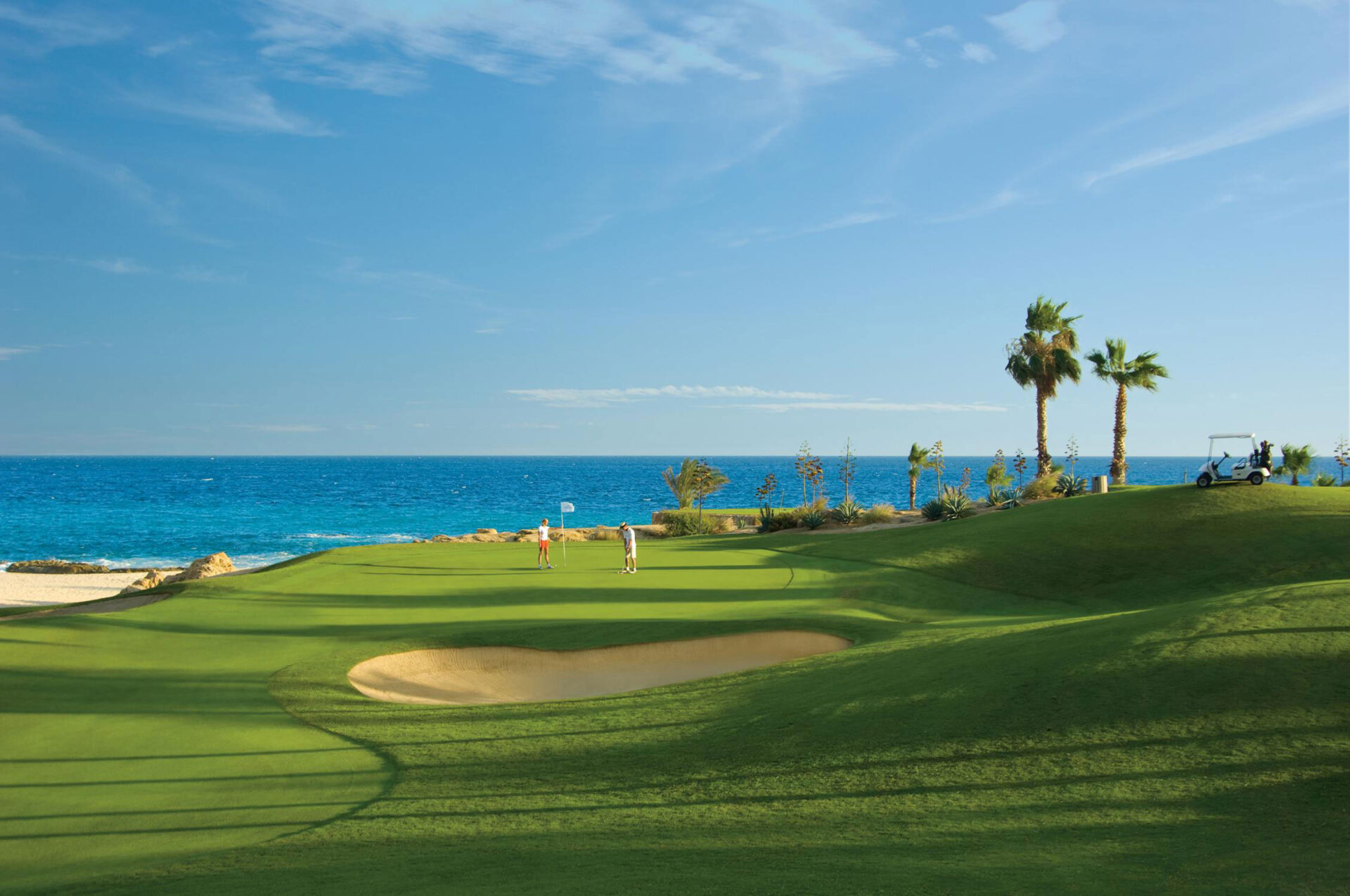
Desert, elevated, traditional.
Not every great Cabo round needs to require private-club membership.
Cabo Real Golf Club, designed by Robert Trent Jones II, remains one of the established accessible courses along the Tourist Corridor.
The course uses the foothills above the Sea of Cortez to create elevation, desert carries and panoramic views.
For residents and frequent visitors, accessible courses like Cabo Real serve an important purpose.
Private clubs may deliver extraordinary exclusivity, but an excellent course that can be booked without owning property or securing a member invitation has a different kind of value.
And for golfers who play regularly, that accessibility matters.
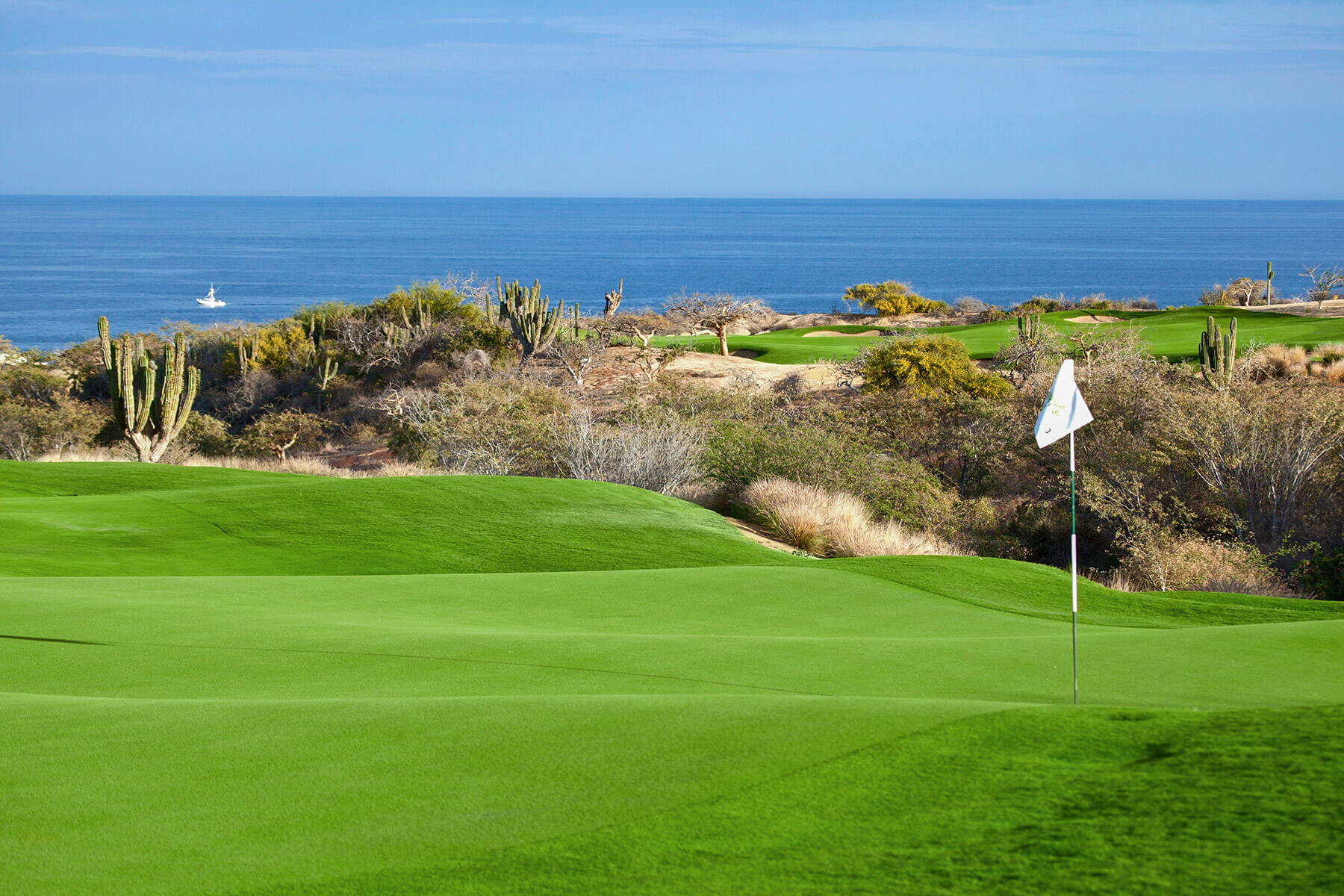
Enjoyable, practical, scenic.
Club Campestre San José is another course that deserves more attention than it sometimes receives.
Designed by Jack Nicklaus, it sits conveniently close to San José del Cabo and uses the rolling desert terrain to create elevated views toward the Sea of Cortez.
It may not deliver the extreme visual drama of Quivira or the exclusivity of El Dorado, but that is not necessarily a weakness.
For someone who spends substantial time in Los Cabos, repeatability and accessibility become increasingly important.
There are rounds when you want an event.
There are other days when you simply want to play golf.
Club Campestre works particularly well for the second category.
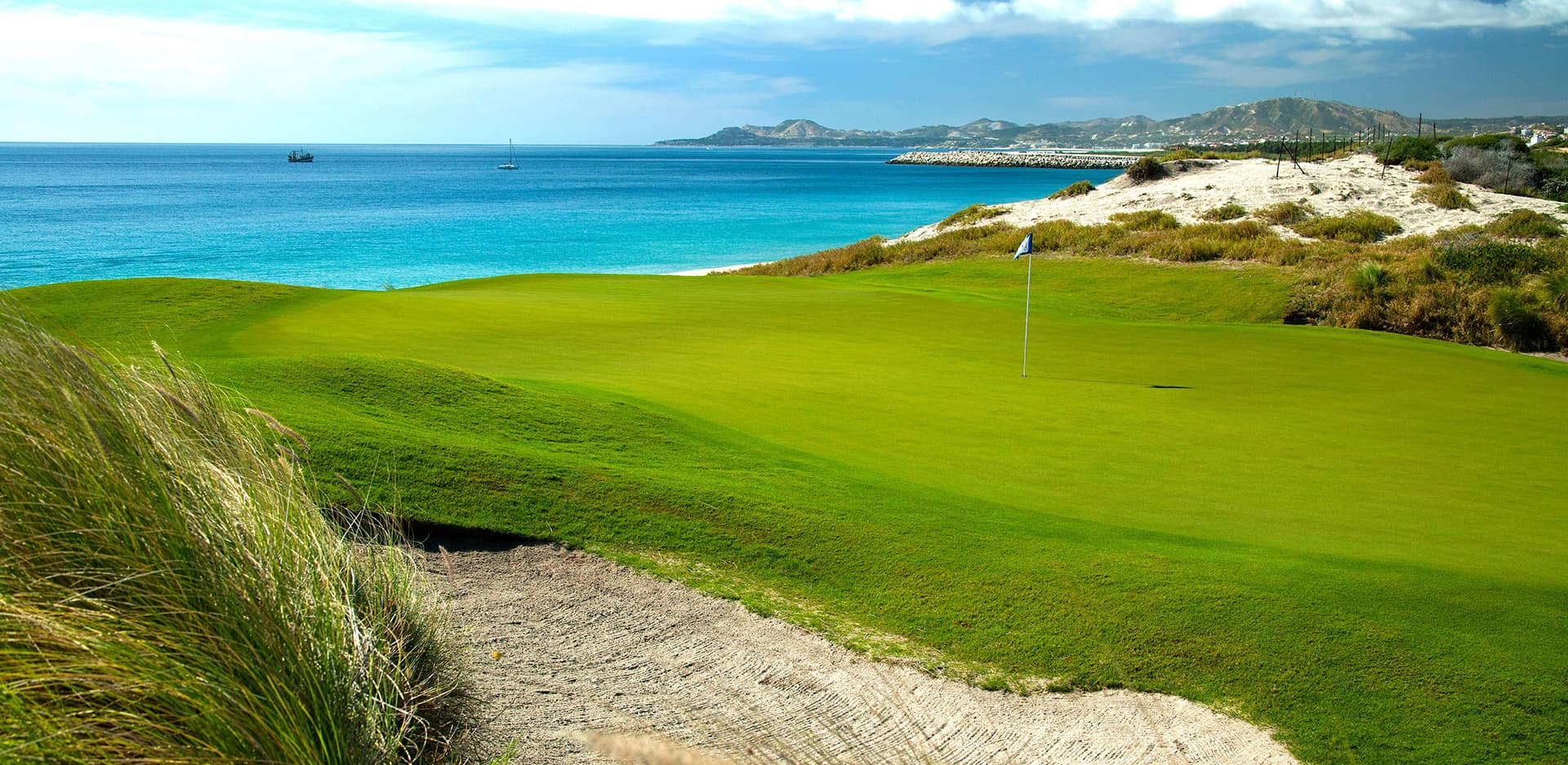
Expansive, social, scenic.
Puerto Los Cabos Golf Club is unusual because its golf offering combines work by two major names: Jack Nicklaus and Greg Norman.
The club currently offers 27 holes, allowing different combinations while the routing moves through desert foothills toward the Sea of Cortez.
The setting also has a different personality from the Tourist Corridor.
Puerto Los Cabos feels connected to San José del Cabo and the East Cape side of the destination, creating an appealing alternative for golfers staying or living on that side of Los Cabos.
Its on-course culinary palapas have also become part of the experience, reinforcing something Cabo does particularly well: making the round about more than simply the score.
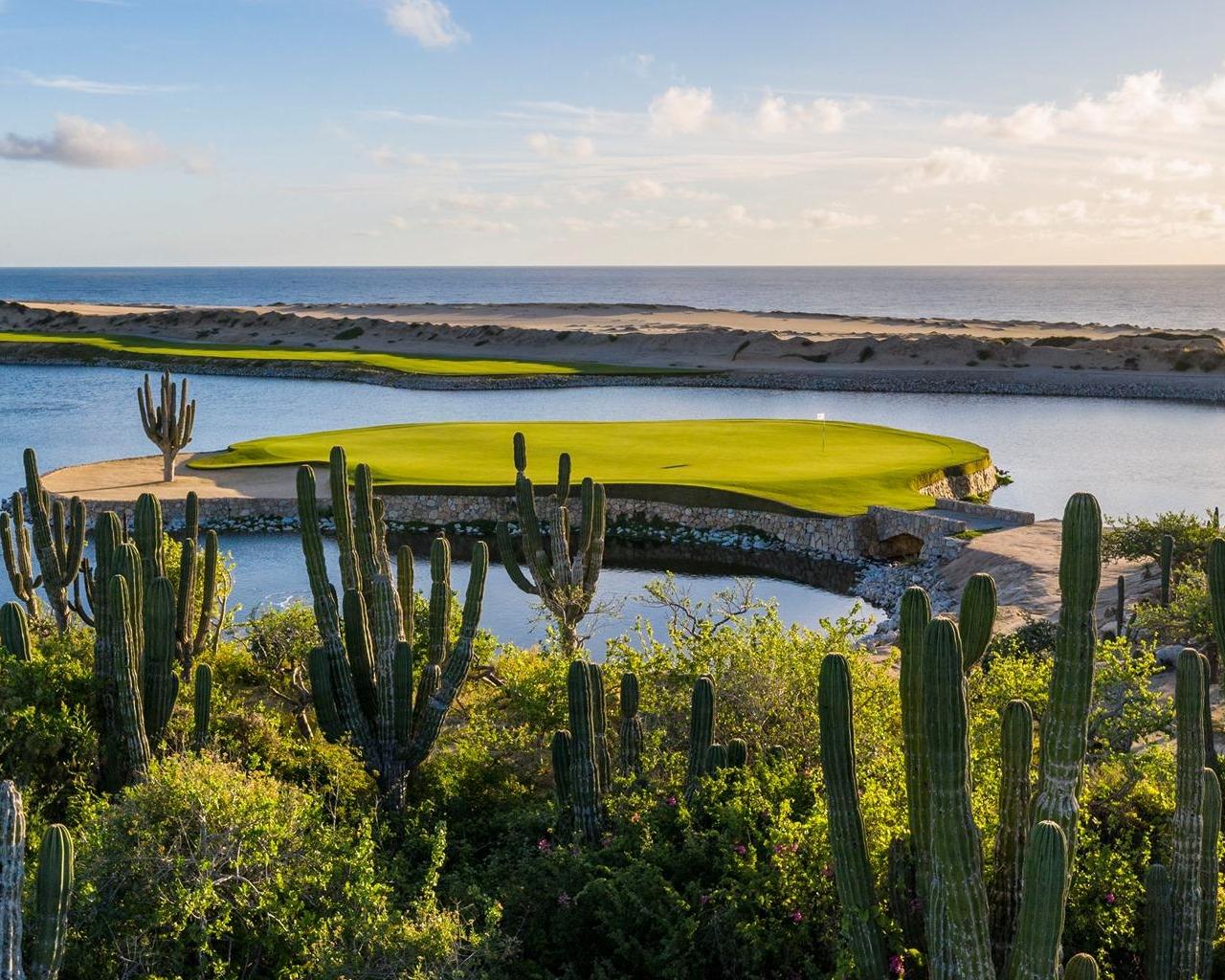
Windswept, natural, varied.
Formerly known as Rancho San Lucas Golf Club, Solmar Golf Links offers Greg Norman’s interpretation of the Pacific side of Cabo.
The course moves through several distinct environments: windswept dunes, cactus-covered desert and beachfront terrain.
Norman’s “least disturbance” philosophy is evident in the way the course follows the existing landscape rather than attempting to overpower it.
That makes Solmar an interesting comparison with both Quivira and Diamante.
All occupy Cabo’s Pacific side.
Yet each interprets the terrain differently.
Quivira emphasizes elevation and drama.
Diamante Dunes emphasizes natural dune golf.
Solmar combines dunes, desert and ocean through Norman’s more ground-oriented philosophy.
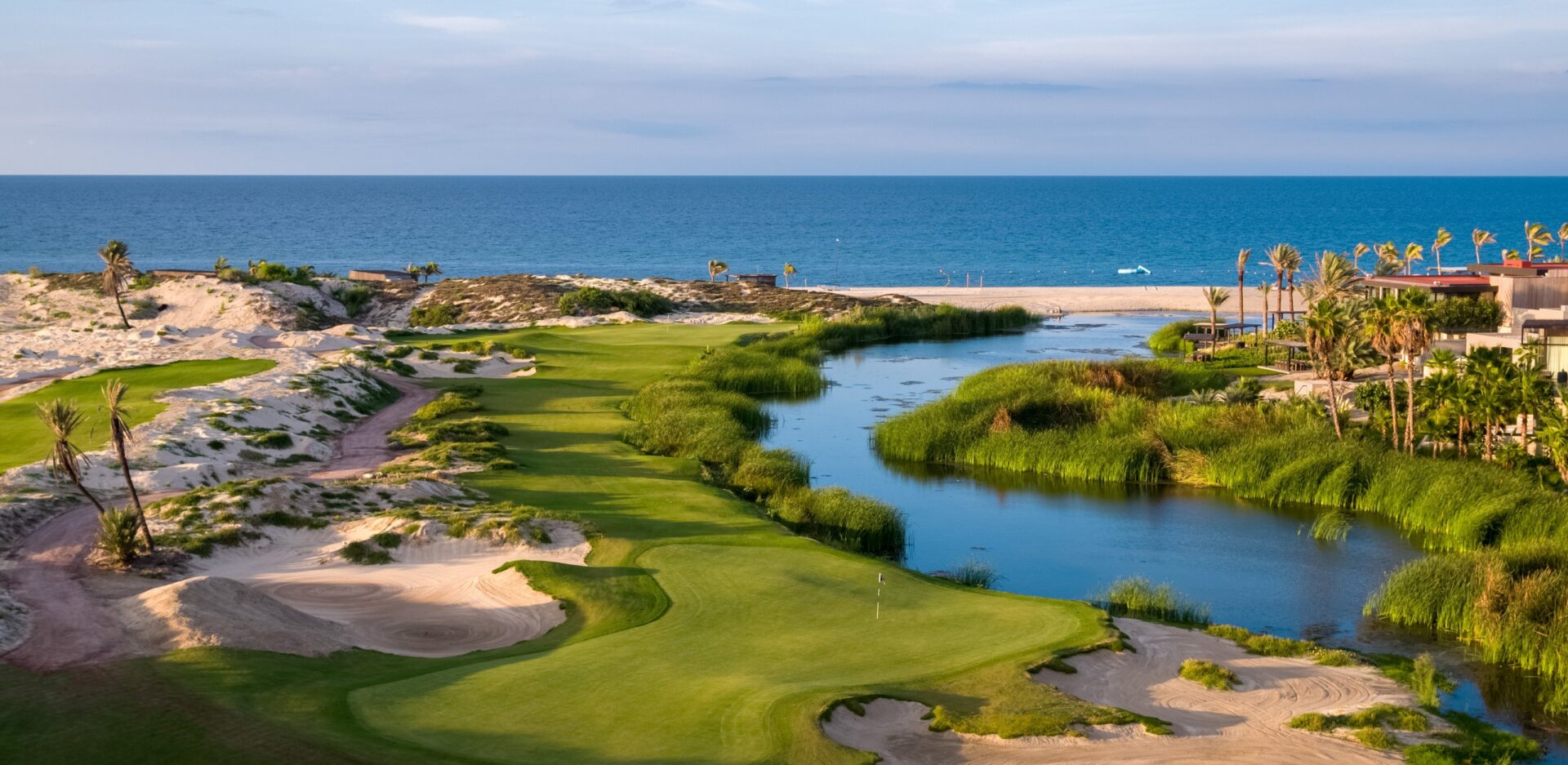
Open, resort-oriented, relaxed.
Continue farther away from traditional Cabo and the landscape changes again.
Costa Palmas Golf Club, designed by Robert Trent Jones II, sits within the expansive Costa Palmas community on the East Cape.
Here, golf is part of a much broader destination built around a swimmable Sea of Cortez beach, marina, Four Seasons, Beach & Yacht Club and luxury residences.
The environment feels fundamentally different from Cabo San Lucas.
Less urban.
More expansive.
More removed.
For golfers who also boat, fish or simply prefer the East Cape lifestyle, that combination can be more important than any individual course ranking.
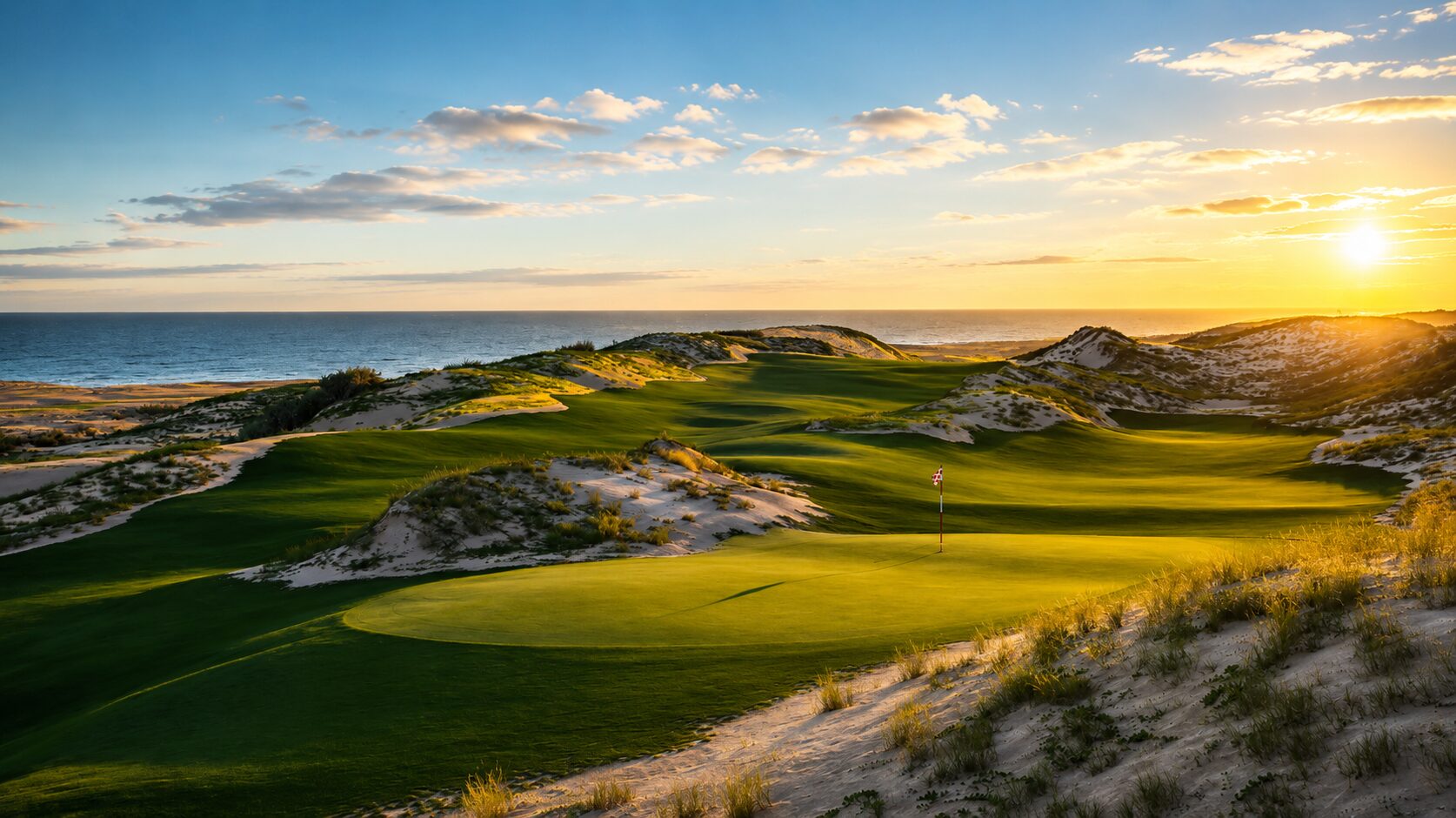
Natural, windswept, links-inspired.
And then there is Oleada Golf Links.
For anyone comparing Los Cabos golf in 2026, Oleada deserves particular attention because it represents something genuinely new.
World Golf Hall of Famer Ernie Els has designed an 18-hole links-style championship course across the natural Pacific dunes at Oleada, approximately 15 minutes from downtown Cabo San Lucas.
It is Els’ first golf course in Mexico.
That alone makes the project significant.
But the more interesting story is the land.
Oleada occupies approximately 860 oceanfront acres with a mile-long stretch of Pacific beach. The golf site contains naturally formed dunes, sandy ridges, valleys and significant elevation changes.
Rather than extensively reshaping that terrain, Els has emphasized a minimalist approach intended to allow the course to follow the existing contours of the property.
The result is intended to be a true links-inspired experience shaped not only by hazards and greens but by the Pacific wind itself.
Ocean views are present throughout the course.
And unlike many of Cabo’s established layouts, Oleada arrives at a moment when the destination already has an extraordinary collection of golf.
It therefore does not simply need to be good.
It needs to be different.
The combination of Ernie Els, Pacific dunes, links-inspired strategy and minimal earthmoving gives it the potential to occupy a distinct position alongside Quivira, Diamante and Solmar.
Because Oleada is new, however, it would be premature to rank it above courses that have established reputations over many years.
Its significance today is as the newest major contender in Cabo’s evolving Pacific golf landscape.
Oleada‘s arrival makes the Pacific side particularly interesting.
Within a relatively small geographic area, golfers can now encounter radically different design philosophies.
This is not simply a collection of golf courses.
It is becoming an outdoor exhibition of modern golf architecture.
For serious golfers, that may be one of the strongest reasons to visit Los Cabos.
Difficulty in Cabo is highly dependent on tees and weather.
Wind can transform a course.
So can elevation changes, firm conditions and unfamiliar sightlines.
Quivira can be intimidating because of its dramatic terrain and forced visual decisions.
Diamante Dunes becomes a sophisticated strategic test when the wind rises.
Querencia rewards thoughtful positioning and approach play.
El Cardonal can become extremely demanding from the back tees while remaining accessible from more appropriate forward positions.
This is why choosing the correct tee box in Los Cabos matters.
Playing the longest tees simply because they are available can turn an extraordinary course into an unnecessarily exhausting round.
The better objective is to play from a distance that allows the architecture to work as intended.
This may be the most difficult category because ocean scenery is one of Los Cabos golf’s defining characteristics.
Quivira makes perhaps the strongest case for pure drama because of its elevation above the Pacific.
Twin Dolphin offers Sea of Cortez views throughout its routing.
Diamante Dunes repeatedly disappears into and emerges from Pacific dunes.
Cove Club has some of Cabo’s most historically recognizable oceanfront golf.
And Oleada has been designed with Pacific Ocean views from every hole.
But the experiences are very different.
The Pacific feels wild and immense.
The Sea of Cortez often feels calmer and more intimate.
Choosing between them is partly a matter of taste.
If golf itself were my primary criterion, I would begin with Diamante and Querencia.
Diamante offers exceptional depth: Dunes, El Cardonal, the Oasis Short Course and additional golf infrastructure, with another Tiger Woods project planned.
Querencia combines a highly regarded original Tom Fazio course with Campo Alto, creating two full private Fazio experiences within one club.
Those are unusual propositions.
For the golfer who plays occasionally, having multiple courses may be a luxury.
For someone playing three or four times per week, it can fundamentally change the ownership experience.
A higher handicap does not necessarily mean avoiding the best courses.
It means choosing courses—and tees—that provide options.
El Cardonal is particularly interesting because its width and multiple strategic routes allow less accomplished players to find a way around the course while still challenging stronger golfers.
Twin Dolphin’s broad fairways and open-entry greens can also make the visual experience less intimidating than some of Cabo’s more dramatic forced-carry environments.
But the most important decision remains the tee box.
Cabo is considerably more enjoyable when the golfer is playing the architecture rather than simply trying to survive the yardage.
This is one of the biggest distinctions when planning golf in Los Cabos.
Courses such as El Dorado, Chileno Bay and Querencia operate within strongly private membership environments.
Twin Dolphin also maintains controlled access associated with its private community and hospitality relationships.
Other courses are more accessible to visitors, although access requirements can vary by property, resort affiliation, season and current club policies.
That means a list of the “best golf courses in Cabo” can be misleading.
A course can be extraordinary and still be irrelevant to your vacation itinerary if you cannot obtain a tee time.
For homeowners, however, that exclusivity can be precisely the attraction.
This is where the distinction between this discussion and buying real estate becomes important.
The best golf course for you does not automatically sit inside the best golf community for you.
A passionate golfer might prefer one particular course.
Their family might prefer another community entirely because of the beach, dining, schools, marina, wellness facilities or proximity to town.
That is why buyers considering golf real estate in Los Cabos should evaluate these as two separate questions:
Where do I most want to play?
And:
Where do I most want to live?
Sometimes the answers are identical.
Sometimes they are not.
| Course | Designer | Setting | Access Character | Best For |
|---|---|---|---|---|
| Quivira | Jack Nicklaus | Pacific | Resort/residential access | Drama & scenery |
| Diamante Dunes | Davis Love III | Pacific | Controlled resort/community access | Architecture & serious golf |
| El Cardonal | Tiger Woods | Pacific | Controlled resort/community access | Strategy & repeat play |
| Querencia Campo Bajo | Tom Fazio | Sea of Cortez side | Private | Private-club golf |
| Querencia Campo Alto | Tom Fazio | Sea of Cortez side | Private | New-generation private golf |
| Twin Dolphin | Fred Couples / Todd Eckenrode | Sea of Cortez | Private/controlled | Naturalistic design |
| El Dorado | Jack Nicklaus | Sea of Cortez | Private | Club culture |
| Chileno Bay | Tom Fazio | Sea of Cortez | Private | Golf + family lifestyle |
| Cove Club | Jack Nicklaus | Sea of Cortez | Private | Iconic coastal golf |
| Palmilla | Jack Nicklaus | Sea of Cortez | Resort/access dependent | Classic Cabo golf |
| Cabo Real | Robert Trent Jones II | Sea of Cortez | Accessible | Corridor golf |
| Club Campestre | Jack Nicklaus | Sea of Cortez | Accessible | Frequent play |
| Puerto Los Cabos | Nicklaus / Norman | Sea of Cortez | Accessible | Variety |
| Solmar Golf Links | Greg Norman | Pacific | Resort/access dependent | Natural Pacific golf |
| Costa Palmas | Robert Trent Jones II | East Cape | Resort/community access | Golf + marina lifestyle |
| Oleada Golf Links | Ernie Els | Pacific | New / access evolving | New links-inspired golf |
Golf access policies can change and should always be confirmed directly with the individual club before planning a round.
There isn’t one.
But there are winners for different golfers.
The remarkable thing is that all of these answers can be correct.
That is what makes Los Cabos different.
Los Cabos is no longer simply adding golf courses.
It is adding increasingly sophisticated golf experiences.
Oleada introduces Ernie Els and links-inspired Pacific golf.
Querencia is adding a second Tom Fazio course.
Diamante continues expanding an already unusually deep golf environment.
And established clubs continue evolving as the luxury residential market surrounding them matures.
For golfers, this means the destination is becoming more interesting rather than simply larger.
For real estate buyers, it means golf is becoming an increasingly important differentiator between communities.
And for Los Cabos itself, it reinforces something that has been developing for more than three decades:
Golf is no longer simply one of the things you can do here.
It has become part of the identity of the destination.
There is no single answer. Quivira stands out for visual drama, Diamante Dunes for natural dune architecture, El Cardonal for strategic playability, Querencia for private-club golf, and Twin Dolphin for its naturalistic Sea of Cortez setting. The best choice depends on the golfer’s priorities and access.
Oleada Golf Links is one of the most important new additions to the Los Cabos golf landscape. Designed by Ernie Els, the 18-hole links-style course is his first golf design in Mexico and uses Oleada’s natural Pacific dunes and oceanfront terrain.
World Golf Hall of Famer Ernie Els designed Oleada Golf Links. It is his first golf course in Mexico.
Tiger Woods designed El Cardonal at Diamante, his first completed golf-course design, as well as Diamante’s Oasis Short Course. Additional TGR Design golf development is also part of Diamante’s evolving golf offering.
Jack Nicklaus has played an extraordinary role in the development of Los Cabos golf. His work in the destination includes Palmilla, Cabo del Sol/Cove Club, El Dorado, Quivira and Club Campestre, along with Nicklaus-designed golf at Puerto Los Cabos.
Quivira is one of the strongest candidates because of its dramatic elevation above the Pacific. Twin Dolphin offers Sea of Cortez views throughout the course, while Diamante Dunes, Cove Club and the new Oleada Golf Links also offer exceptional ocean settings.
Diamante currently offers one of the deepest golf environments in Los Cabos, with the Dunes Course, El Cardonal, Oasis Short Course and additional golf amenities. Querencia is also becoming particularly significant with two full-length Tom Fazio courses: Campo Bajo and the new Campo Alto.
No. Los Cabos combines private clubs, resort- or residentially controlled courses and more accessible daily-fee golf. El Dorado, Chileno Bay and Querencia are examples of strongly private club environments. Access rules can change, so tee-time eligibility should be confirmed directly with each course.
Yes. Pacific courses generally encounter a more exposed environment with large dunes, stronger ocean influence and dramatic terrain. Sea of Cortez courses often combine desert foothills with elevated ocean views and a somewhat different coastal character. Individual course architecture ultimately matters more than geography alone.
El Cardonal is particularly interesting because Tiger Woods designed wide playing corridors with multiple strategic options, allowing higher-handicap golfers to choose conservative routes while still creating challenges for accomplished players. Appropriate tee selection remains important on every Cabo course.
That depends on whether the buyer values multiple courses, private membership, beach lifestyle, location or family amenities. Diamante, Querencia, El Dorado, Chileno Bay, Cove Club, Maravilla/Twin Dolphin, Quivira and Costa Palmas all offer very different golf-oriented ownership experiences. A golf course should therefore be evaluated together with the broader community and the individual property.
Each course above sits inside a residential community. If the round is only half the decision, start here.
VanSirius · Privacy
Beyond the first look
You have viewed three residences. Introduce yourself to keep exploring the coast — it takes a moment.
Thank you
Behind the Door
Beyond the public market. A deeper level of access, context and insight into Los Cabos luxury real estate.
Access by invitation or request. Reviewed personally.
Request received
Your request is with us. We review every request personally and will write to you shortly.
Your private account
Create a password to access your account: your saved residences, preferences and alerts, in one place.
Member access
Sign in to your saved residences, preferences and alerts.
Check your inbox
We sent a private link to m•••@aol.com. It works once and expires in 30 minutes.
Nothing in your inbox? Check your spam folder, or send it again.
Your private account
For your security, access links work only once and for a limited time. We can send you a fresh one right away.